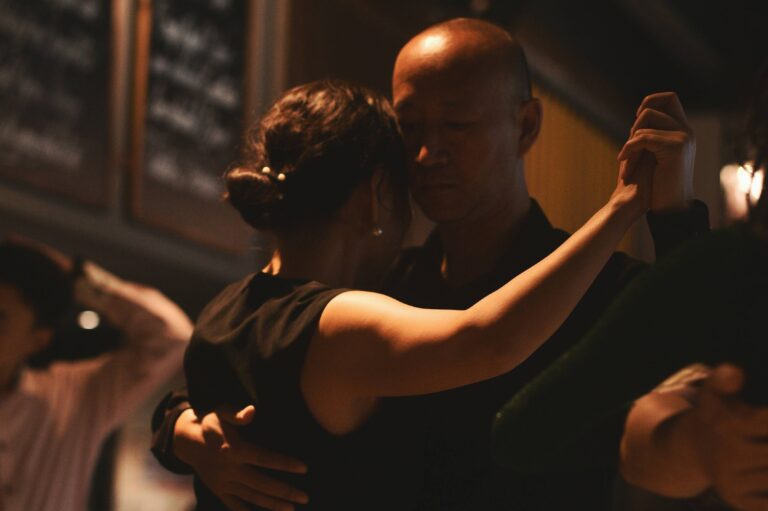
Attachment anxiety hits when love becomes real
Attachment anxiety has a curious mechanism: it doesn’t hit when someone is far away. It hits the moment someone truly gets closer.
As long as there’s distance, tension, uncertainty, things feel fine. There’s longing. Fantasy. Maybe even an intense sense of being in love.
The moment the other person becomes reliable, truly available, safe, something starts to pull. The urge to leave. To find fault. To doubt. Or you find yourself choosing, again and again, someone who isn’t really available.
That’s not bad taste and it’s not bad luck. It’s an old pattern, something your nervous system learned somewhere along the way and has been faithfully applying ever since. Protection, once. Now in the way.
And it has a name.
You’re not addicted to that person. You’re addicted to the hope that they’ll choose you.
What is attachment anxiety
Attachment anxiety is the fear of truly connecting with another person. Not just practically, like living together or making plans for the future, but above all emotionally. The fear of losing yourself. Of being hurt. Of becoming so dependent that you can’t leave.
In psychology, this is linked to insecure attachment. Hazan and Shaver described romantic love as an attachment process, building on Bowlby’s work. Attachment patterns from your early years carry forward. Into how you look for love, how you respond when someone gets close, and how you handle the fear of being left.
In my work, I see two patterns that keep coming back.
The first: someone longs for love, but real closeness quickly feels suffocating. The moment the other person becomes reliable, the pulling starts. Looking for faults. Doubting. Backing away. Not out of indifference, but out of self-protection that once served a purpose.
The second: someone has a strong longing for connection, but is at the same time terrified of being abandoned. That leads to pleasing. To waiting. To losing yourself in the hope that the other person will stay. And sometimes to attracting exactly the people who are never truly available.
For your nervous system, tension feels like love. But it’s uncertainty. And that’s something very different.
Where does attachment anxiety come from?
Attachment anxiety can develop when love didn’t always feel safe in the past. That doesn’t mean you grew up in a loveless home. There may have been a great deal of love, and at the same time beliefs can take root that later colour everything.
I hear them over and over in sessions: ‘Men are just like that.’ Or: ‘You shouldn’t feel too much.’ Or: ‘If you really trust, you’ll end up getting hurt.’ Phrases someone absorbed so literally that they’ve come to feel like facts. But they’re not facts. They’re protective beliefs that come from somewhere.
Sometimes from your family, sometimes from earlier relationships or friendships. Later you carry them with you, not consciously, but because your nervous system thinks it’s keeping you safe.
Research on adult attachment shows that people with attachment anxiety respond more strongly to possible rejection, while people with attachment avoidance tend to protect themselves by suppressing emotions or keeping their distance.
Free E-book
Do you recognise attachment anxiety in yourself or your partner?
You will receive the book by email
Why unpredictable love can feel so addictive
Something else is often at play with attachment anxiety: intermittent reinforcement, or unpredictable reward.
You sometimes do receive love, attention and warmth, but not consistently. One moment someone is intensely present. The next, they disappear. One day there’s hope, the next day silence.
That very alternation can feel enormously addictive. Behaviour that is sometimes rewarded but not always can stubbornly persist, the so-called partial reinforcement extinction effect. In intimate relationships, a similar mechanism is at work: you’re not addicted to the love itself, but to the hope of it.
In practice, it looks like this:
You’re waiting for a text. Sometimes you get a lot of attention, then it goes quiet. Then a warm message arrives. You feel relief. Your brain thinks: there, you see, there’s hope.
The problem: you’re no longer just responding to love. You’re also responding to uncertainty. Research by Whitchurch, Wilson and Gilbert shows that uncertainty about whether someone likes you can actually increase attraction.
That doesn’t mean every unavailable partner is deliberately manipulating. Sometimes they’re afraid of closeness themselves. But the effect can be the same: you become more and more entangled in waiting and hoping.
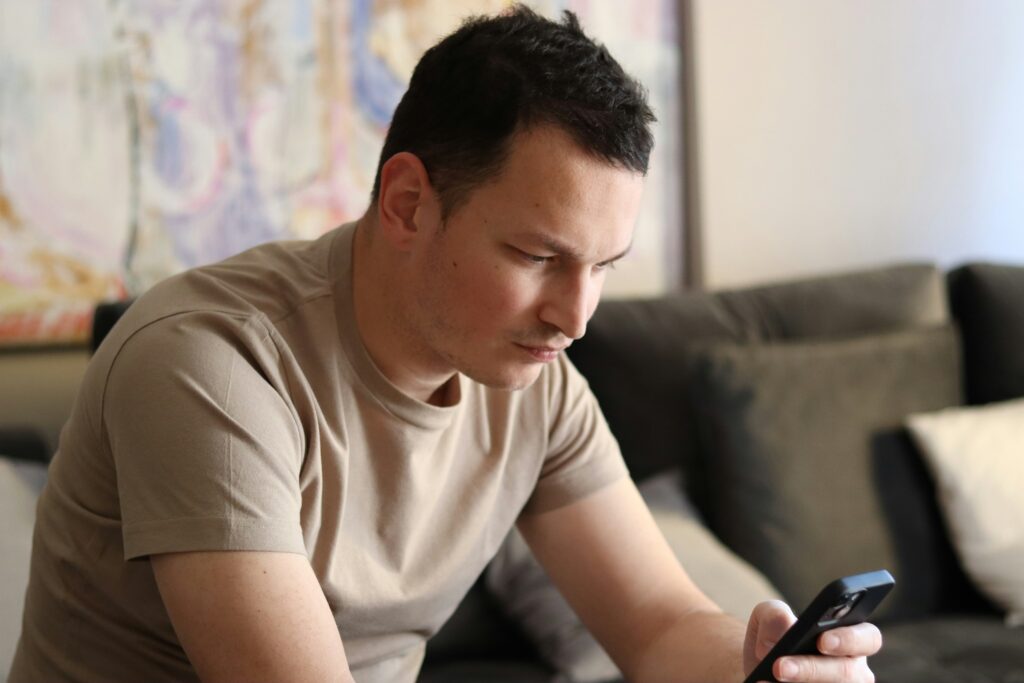
Two real-life stories
case 1 – she knew it herself
‘They’re never available. I keep falling for them.’ She sat across from me and said it plainly. She was 26.
She kept falling for people with a lot of charm, a lot of promise and little reliability. Her head knew: this isn’t right. But her feelings kept pulling, again and again.
That’s what’s so confusing about attachment pain. You can know rationally that something isn’t good for you, and still stay emotionally hooked. In her case, old experiences also played a role: bullying and boundary violations in her childhood, and a message from her family: ‘Men are just like that.’
Together we looked at the layer beneath the behaviour. Not: what are you doing wrong? But: what is this pattern trying to protect? And: which part of you wants to finally be chosen?
A year later she was in a stable relationship. There was still the occasional dance of pulling close and pushing away, but she recognised it sooner, judged herself less harshly, and made different choices.
Case 2 – He was already standing at the door
“I know it’s not good for me,” he said. “But I can’t let her go.” He was already standing at the door but couldn’t bring himself to leave. His partner had betrayed his trust time and time again. He stayed, out of fear of losing her and being alone.
He felt broken. As if he could no longer trust anyone.
But during their conversations, other words came up: he longed for excitement, adventure, and vibrancy. His partner gave him that. The only problem was that the way she sought excitement clashed with his need for security.
The question became: Can you bring adventure into a relationship on your own, without depending on the other person? His new criterion was no longer, “The other person has to give me excitement,” but rather, “In a relationship, we need to be able to discuss how we keep excitement and freedom alive together.” That feels like a completely different place from which to make choices.
Attachment anxiety, or simply not in love?
Not every doubt is attachment anxiety. It’s probably the most frequently asked question in my sessions, and one I’ve asked myself too.
Sometimes you’re simply not in love. Someone doesn’t suit you. There’s not enough connection. In those cases, the doubt usually feels calm: this isn’t right for me. That’s not fear. That’s clarity.
With attachment anxiety it’s different. There’s confusion. Attraction and repulsion at the same time. You long for the other person, but panic the moment that closeness is actually there. Or you notice you keep choosing people who can’t really choose you, and the pattern repeats, even when you see it coming.
DOES THIS SOUND FAMILIAR?
Am I especially attracted to people who aren’t available?
Do I feel anxious the moment someone is reliable and close?
Do I start to doubt once the relationship feels safe?
Do I confuse tension with love?
Do I get addicted to hope, promise and intermittent attention?
If this keeps coming back, it’s rarely a coincidence. Then something else is going on beyond simply bad luck with people.

What can help?
Attachment anxiety doesn’t change by judging yourself harder. And not by a partner saying: ‘Just trust me.’ Trust can’t be forced. It can be built, but first you need to understand where the distrust comes from.
In my work, we look together at the layer beneath the behaviour. Not at yesterday’s argument, but at the question underneath: what is this pattern actually trying to protect? And: who taught you, somewhere along the way, that love was dangerous?
That can happen in various ways: NLP, cognitive behavioural therapy, EMDR, hypnosis or EFT (Emotional Freedom Technique, also known as tapping). With EMDR, it’s important that there’s enough safety first. Trauma work that moves too fast can end up feeling unsafe all over again. And that’s exactly what you don’t need.
Sue Johnson, who developed Emotionally Focused Therapy (not to be confused with the EFT mentioned above), asks very different questions from most forms of therapy. Not: who is right? But: are you still there for me? Can I reach you? Is it safe to be close to you? Those questions get to the heart of attachment anxiety. Are you still there for me? Can I reach you? Is it safe to be close to you? Those questions get to the heart of attachment anxiety.
Another point I’d like to make: insecure attachment isn’t permanent. That may sound easy to say, but it’s backed by solid scientific evidence. Research on “earned security” shows that people with a history of insecure attachment can still develop a secure attachment style. Not by erasing the past. But by gaining new experiences of genuine security—in therapy, in a healthy relationship, or both.
Attachment anxiety in a long-term relationship
Attachment anxiety isn’t limited to dating. It can also have a significant impact on long-term relationships.
One partner wants to talk. The other clams up.
One person seeks closeness. The other seeks space.
One person thinks: You’re letting me down.
The other person thinks: You’re swallowing me whole.
Before you know it, you’re stuck in a push-pull dance.
I don’t write about this only from my work as a coach. I write about it because I know what the dance of closeness and distance feels like from the inside. That makes the subject personal for me, and it also makes me sharper about what’s really needed.
In couples therapy, the focus isn’t on assigning blame. It’s about learning to recognize the dance and taking a different step together.
A lasting, loving intimate relationship doesn’t ask you to be perfect. It asks that you’re willing to look at the layer beneath the behaviour, in yourself and in each other. That’s sometimes uncomfortable. It’s also the only thing that really helps.
Sometimes that works on your own. Sometimes support helps, not because you’ve failed, but because love sometimes needs a safe external space in order to change from within.